In the context of global deployment, the Cloud Singapore Server Selection Guide aims to help enterprises strike a balance between bandwidth, latency, availability zones, security and compliance. This article analyzes key indicators and practical considerations from a professional perspective to facilitate quick comparison and implementation by technical and decision-making teams.
When choosing a cloud Singapore server, bandwidth and latency are the primary considerations. Evaluate peak concurrency and bandwidth burst capabilities, pay attention to the quality of the ingress and egress network and the physical distance from the target market, and then determine link redundancy and acceleration strategies to ensure a smooth user access experience.
When using the Singapore Availability Zone to build a fault-tolerant architecture, active and backup distribution, cross-AZ replication and failover time should be considered. Reasonable hierarchical deployment of applications and databases can not only improve availability, but also reduce delays and cost conflicts caused by cross-region synchronization.
Network export selection affects international traffic quality. Pay attention to operator interconnection, direct connection points and backbone paths, and evaluate whether it is necessary to establish dedicated lines or use CDN and cloud interconnection services to reduce the number of hops and improve the stability of overseas nodes.
Public network IP and elastic bandwidth configuration determine external network access capabilities. In order to cope with traffic fluctuations, it is recommended to deploy elastic bandwidth, traffic thresholds and traffic limiting policies, and combine it with load balancing to achieve traffic distribution and health checks to ensure stable business operation during peak periods.
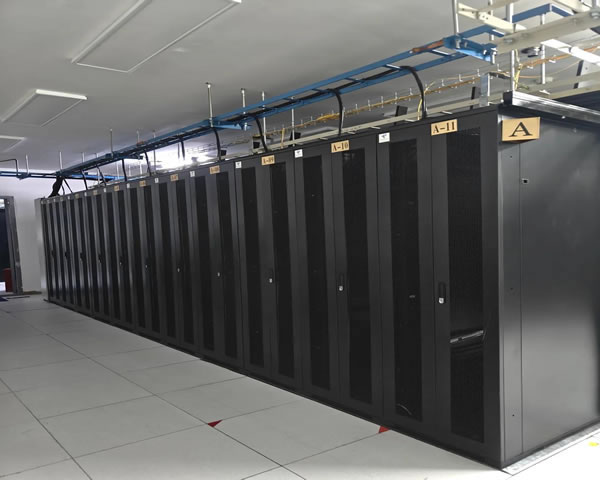
Different applications have significantly different storage performance requirements. Based on the reading and writing characteristics of databases, logs, and static files, rationally select storage types with high IOPS and low latency, design backup and off-site replication strategies, and take into account consistency and recovery time objectives (RTO).
Deployment in Singapore requires attention to data sovereignty, privacy protection and industry compliance requirements. Implement network isolation, DDoS protection, access control and encrypted transmission, and formulate intrusion detection and audit strategies to ensure that legal and customer trust requirements are met in cross-border business.
Cost and performance need to be balanced. Optimize costs through elastic scaling, a combination of on-demand and reserved resources, and reasonable instance specification selection. Use autoscaling or batch windows for non-core tasks to reduce long-term operating costs and improve resource utilization.
Establish a complete monitoring and alarm system, covering bandwidth, delay, error rate and resource utilization. Combined with log analysis and link tracking, service availability and SLA commitments are regularly evaluated to ensure rapid location and service recovery in abnormal situations.
Cloud Singapore server selection should be comprehensively considered from the five major dimensions of bandwidth, availability zone, network interconnection, security compliance and cost. It is recommended to conduct traffic and disaster recovery assessments first, formulate network interconnection and monitoring plans, and then allocate storage and computing resources based on business types to achieve stable and scalable global deployment.
- Latest articles
- Why Enterprises Choose To Access Hong Kong Servers And Bypass Japan’s Hybrid Cloud Strategy
- Interpretation Of Malaysia Unicom’s Serverless Service From An Operator’s Perspective: Common Causes And Division Of Responsibilities
- Security Control List Helps Enterprises Maintain Access Control For Servers Hosted In The United States
- Construction And Maintenance Why You Should Pay Attention To The Service Provider SLA When Renting A German Server Dedicated Line
- Technical Prevention Improves The Ability Of Enterprises To Resist Attacks Related To Video Of Thailand Computer Room Fraud Incident
- Integration Of High-defense And Native IP, Taiwan Vps Native IP, Detailed Explanation Of High-defense Cloud Host Security Strategy
- How Is It Possible To Improve Thailand Vps Speed In All Aspects From DNS To Route Optimization?
- Korean Sk Cloud Server Acceleration Optimization Case In The Game And Video Industry
- From Novice To Operation And Maintenance Alibaba Cloud US Server Website Operation Entrance And Resource Configuration Full Process
- Comparison Of The Advantages And Disadvantages Of Self-operated Computer Rooms And Cloud Hosting In Hong Kong Site Cluster And Migration Suggestions
- Popular tags
-

How Does The Download Speed Of Singapore Vps Compare With Tencent Cloud?
this article will discuss the comparison between the download speed of singapore vps and tencent cloud to help users choose the most suitable cloud service. -

How To Configure A Firewall To Prevent US VPS Data From Showing Traffic Hijacking Issues In Singapore
Introducing how to prevent US VPSs from being mistakenly identified as Singapore and leading to traffic hijacking risks through measures such as firewall configuration, GeoIP filtering, reverse path filtering, routing security, and monitoring. Provides highly operable checklists and recommendations. -

Key Factors In Choosing The Right Singapore Cloud Server Platform
This article explores the key factors in choosing the right Singapore cloud server platform to help enterprises make informed decisions in the cloud computing environment.